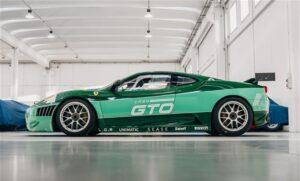
For sale by RM Sotheby’s – 2017 Ferrari 488 GT3


For sale by RM Sotheby’s – 2017 Ferrari 488 GT3

All details and more pictures HERE at RM Sotheby’s

Estimate 500.000-600.000 $

Chassis No. GT34414
 
  • Ferrari’s first forced-induction, closed-roof racer since the F40
  • A highly successful platform with over 500 victories in international competition
  • Sold to its first and only owner in December 2017
  • Sparingly used with 1,087 miles logged at cataloguing time
  • Accompanied by copies of its original sales invoice, Certificate of Origin, and service invoices

Arguably the most popular sports car racing category across the world, FIA GT3 is host to the world’s leading manufacturers competing head-to-head with production-based racecars piloted by both amateurs and professionals. Ferrari first entered the category in 2007, with the 430 GT3 receiving the ninth official homologation from the FIA, albeit with development by the Kessel Racing squad. Ferrari’s first factory-developed GT3 car was the 458 Italia GT3, which achieved numerous wins in nearly every GT championship across the globe. Its successor, based on the series-production 488 GTB released in 2015, continued the Italian automaker’s winning GT3 legacy.

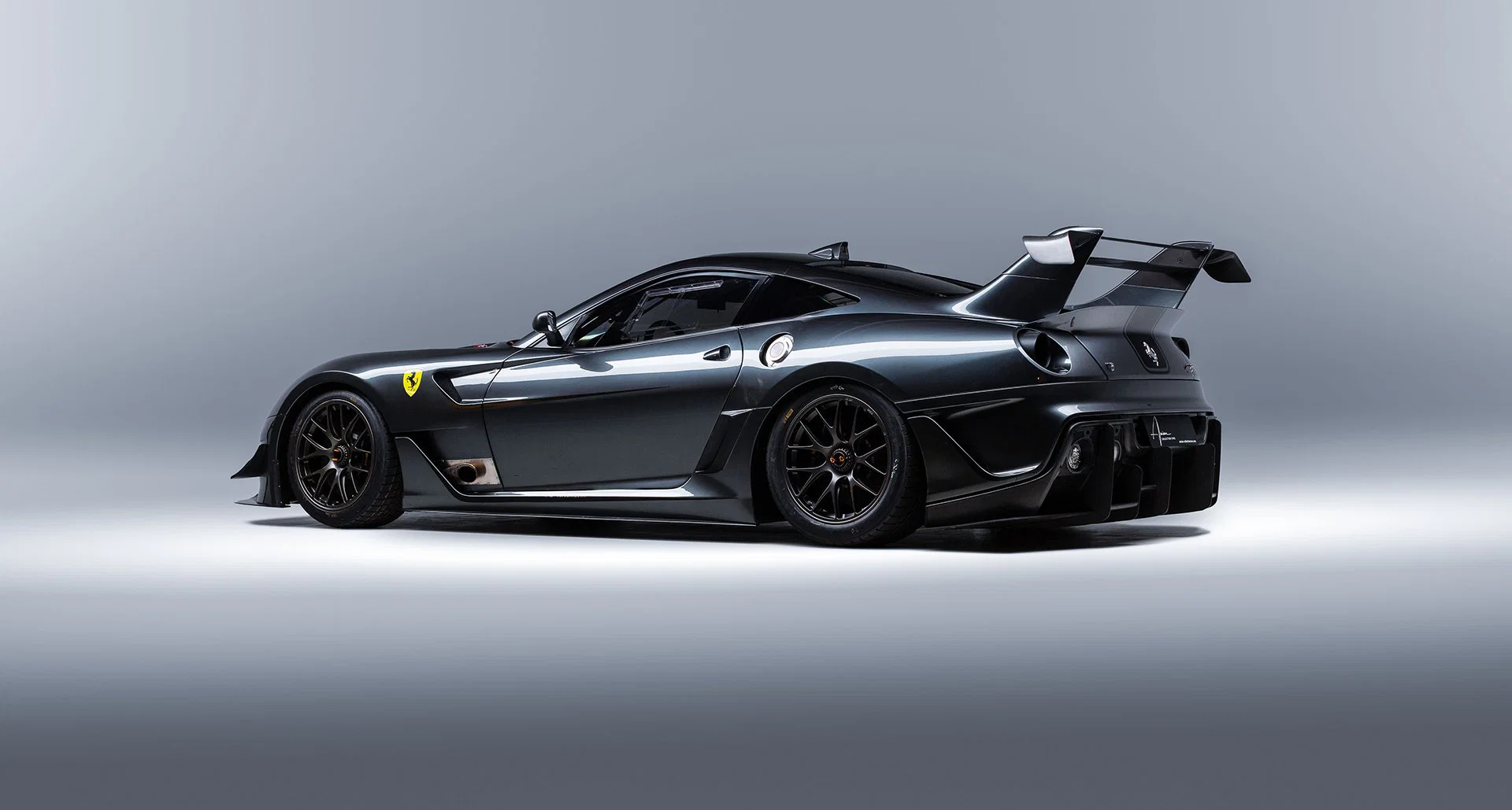
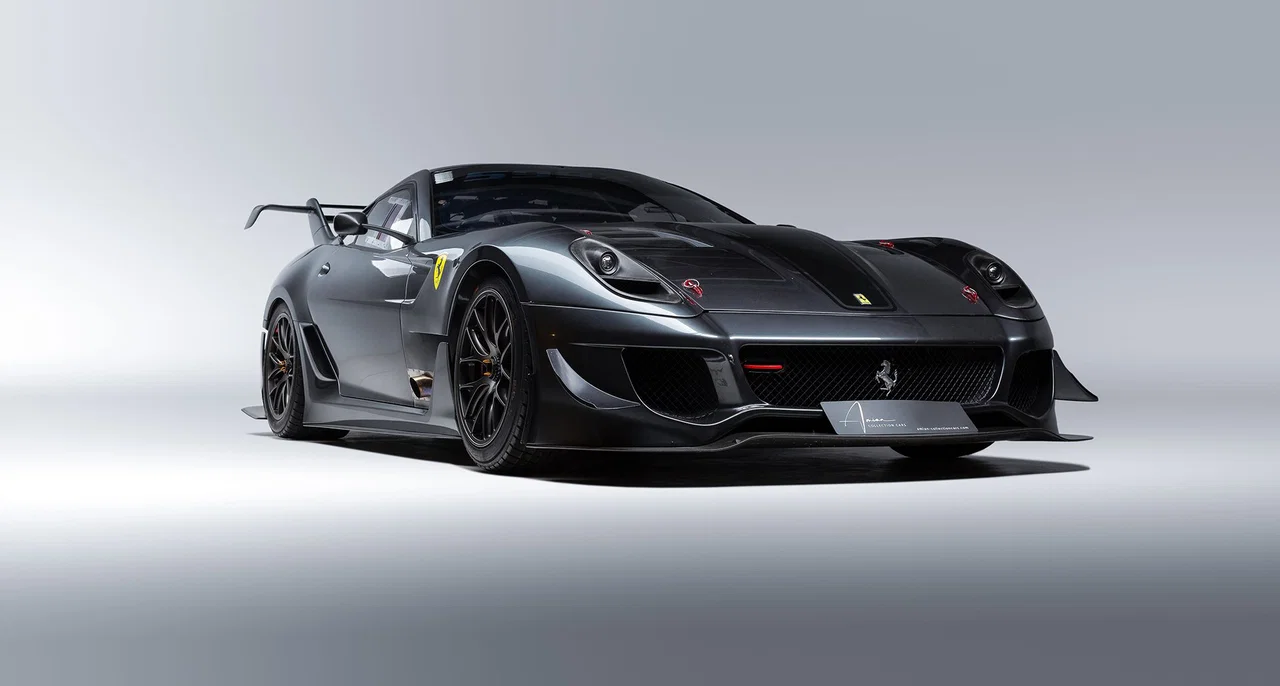
Every 488 GT3 began life on the same production line as the road cars, but a wholly composite body structure engineered for lightness and shell-latched for ease of maintenance helped to complete the transformation into a competition machine. Further modifications included wider wheel arches, an aggressive front splitter, a larger diffuser, and an adjustable rear wing.

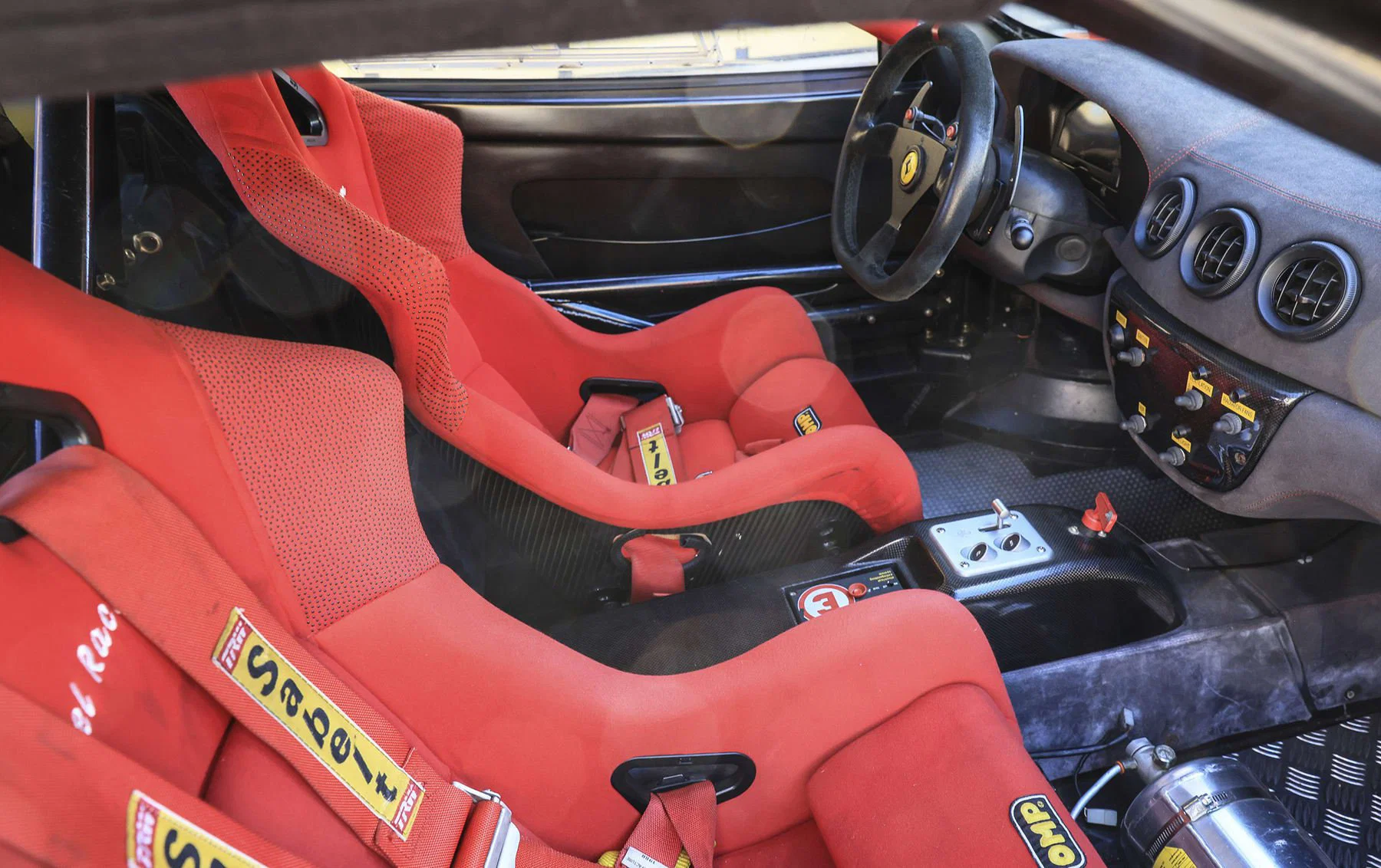
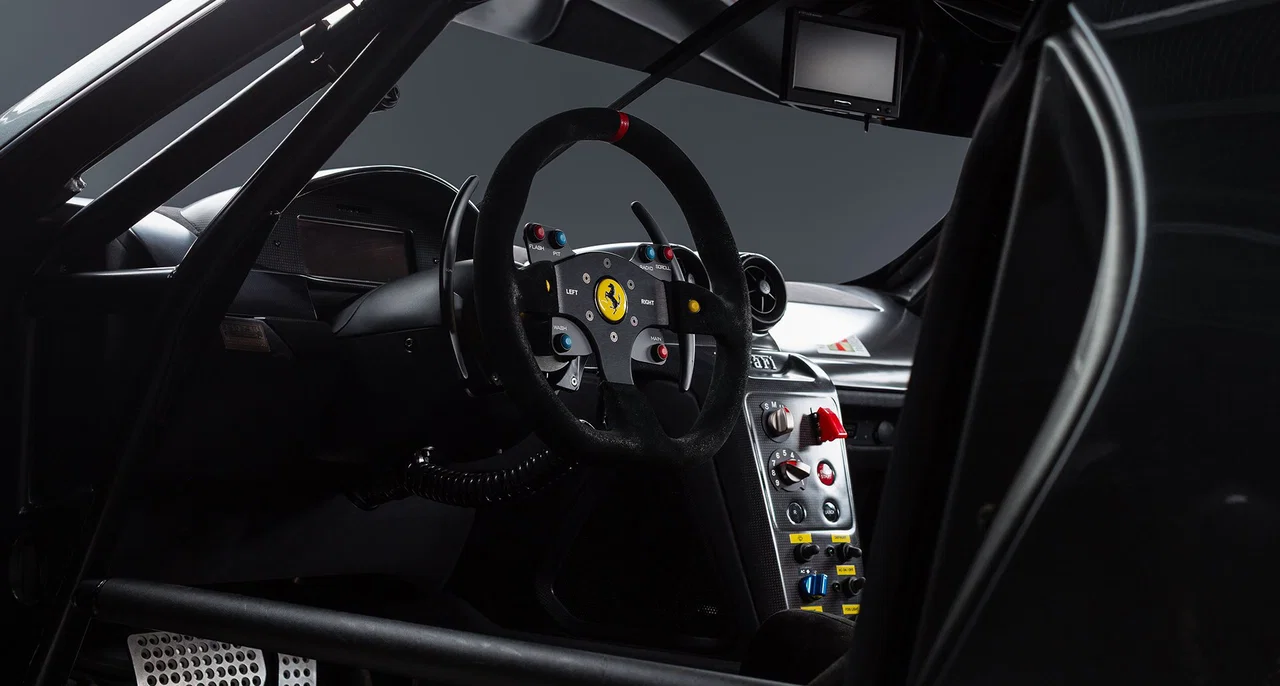
The interior rightly forgoes the luxurious treatments of the road car, stripped of all unnecessary components to reduce weight. The steering wheel incorporates all of the most important controls, including engine mapping, fuel mix, traction control, and the driver’s drink supply.

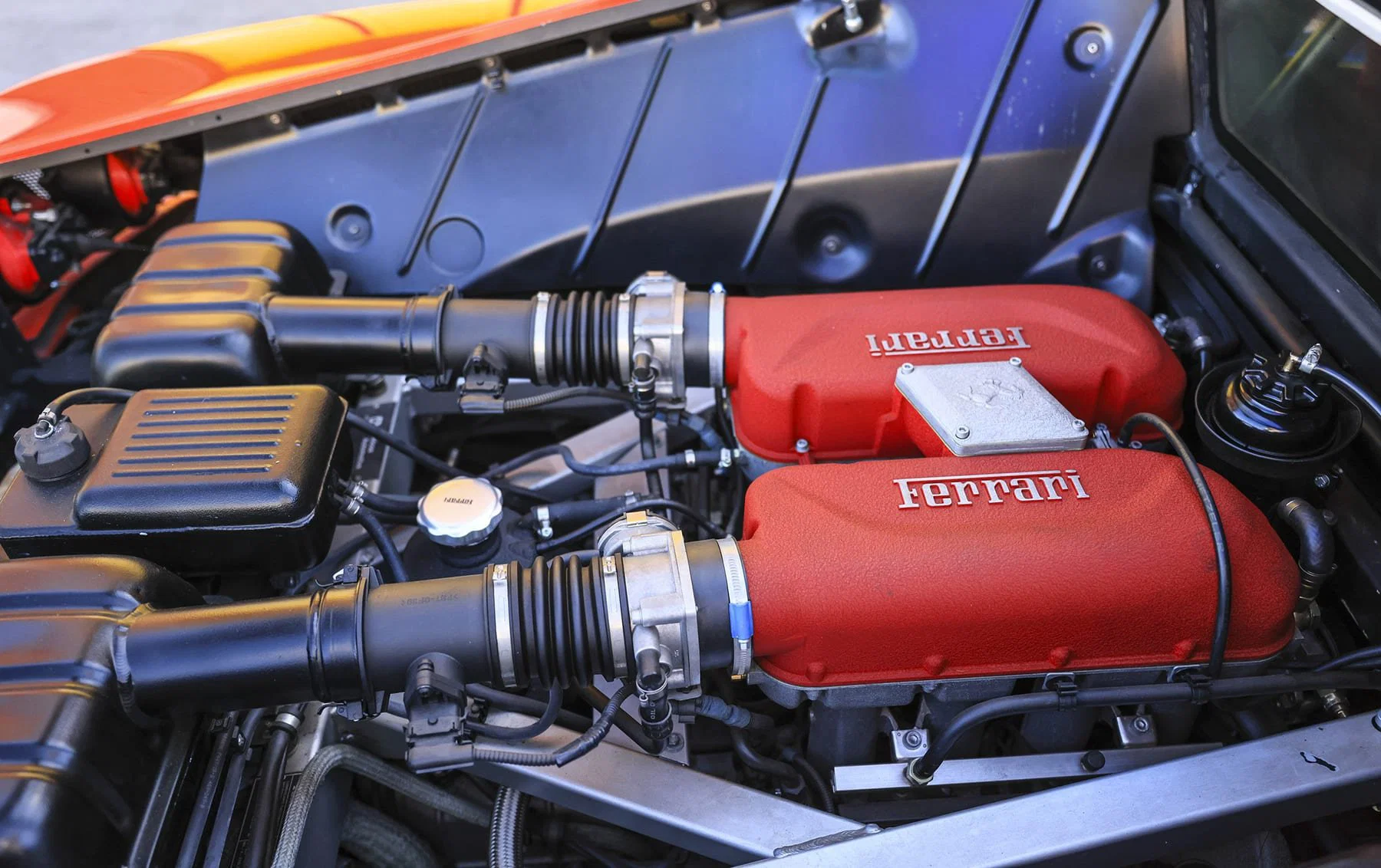
Ferrari’s first forced-induction closed-roof racer since the F40, the 488 GT3 is powered by a twin-turbocharged 3.9-liter V-8 engine providing around 600 horsepower to the rear wheels via a transversely mounted six-speed sequential gearbox. Easily one of the most successful racecars within the category, the 488 GT3 achieved more than 500 wins over the course of its time in international competition.

The Ferrari 488 GT3 offered here, chassis 4414, was sold to its original and current owner on 15 December 2017. A Ferrari sales invoice on file indicates the vehicle was fitted from new with a rearview camera kit, second seat kit, handicap ballast box, a carbon clutch, endurance brake calipers, steel wheel nuts, catalyst exhaust system, tire pressure monitoring system, extended data acquisition system, and a 24-hour light kit.

Since being delivered, the 488 GT3 has been sparingly used at track-day events, with 1,087 miles logged on the odometer at cataloguing time. Invoices on file dating back to January 2018 confirm the car has been serviced and maintained by official Ferrari dealer Lake Forest Sportscars of Lake Bluff, Illinois. Work included a brake service and oil change in January 2021, and a multi-point inspection, battery replacement, and annual fluid service in December 2022.

One of the great racing Ferraris, this 488 GT3 represents a spectacular, historic, and highly competitive prospective entry into track days and the myriad events for which it is eligible.

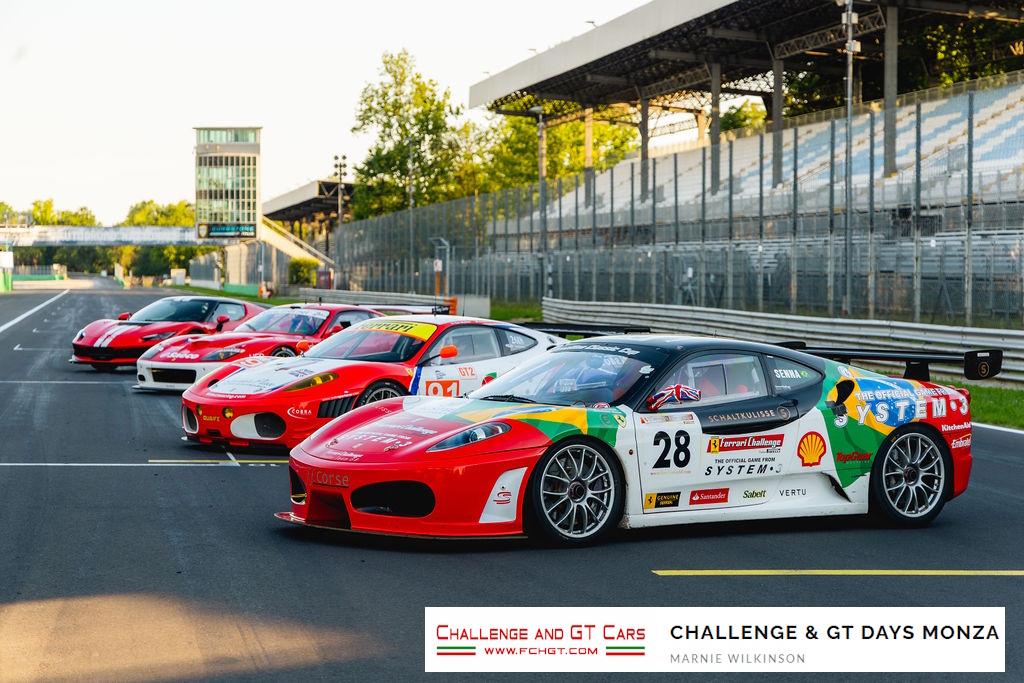
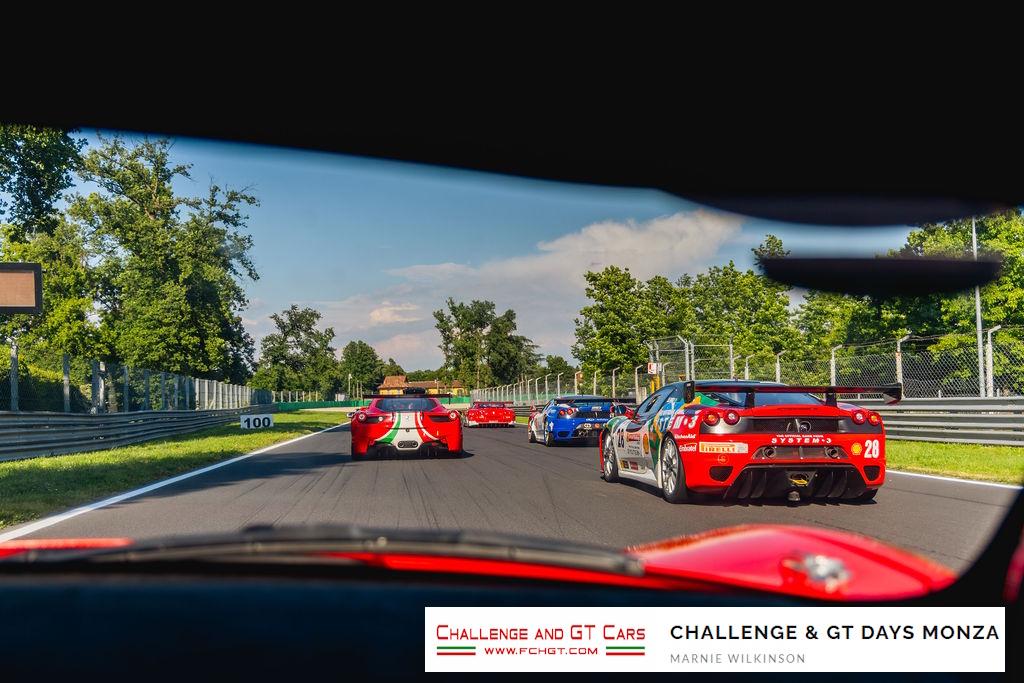
Timetable for our Challenge and GT Days 2026

Here you find the timetable for our Challenge and GT Days 2026 in Monza

All details and informations about the event HERE

Pre Day 19 of May:

14.00 – 18.00 Registration VIP Lounge at the Monza Cicuit and set up in the pits (latest 18.00)

18.30 – 20.30 Meet the Drivers with drinks an small food at the Hotel de la Ville in Monza (very close to the track) https://hoteldelaville.com

*Timetable Day One Thursday 20 of May – Drivetime:

09.00 – 09.30 Drivers meeting (mandatory fro all drivers) VIP lounge

09.35 – 09.55 Group 1

10.00 – 10.55 Group 2

11.00 – 12.00 Group 3 and 4

12.00 – 13.30 Lunch break

13.30 – 13.50 Group 1

13.55 – 15.00 Group 2

15.05 – 16.00 Group 3 and 4

16.05 – 16.25 Group 1

16.30 – 17.30 Open pitlane for group 2, 3 and 4

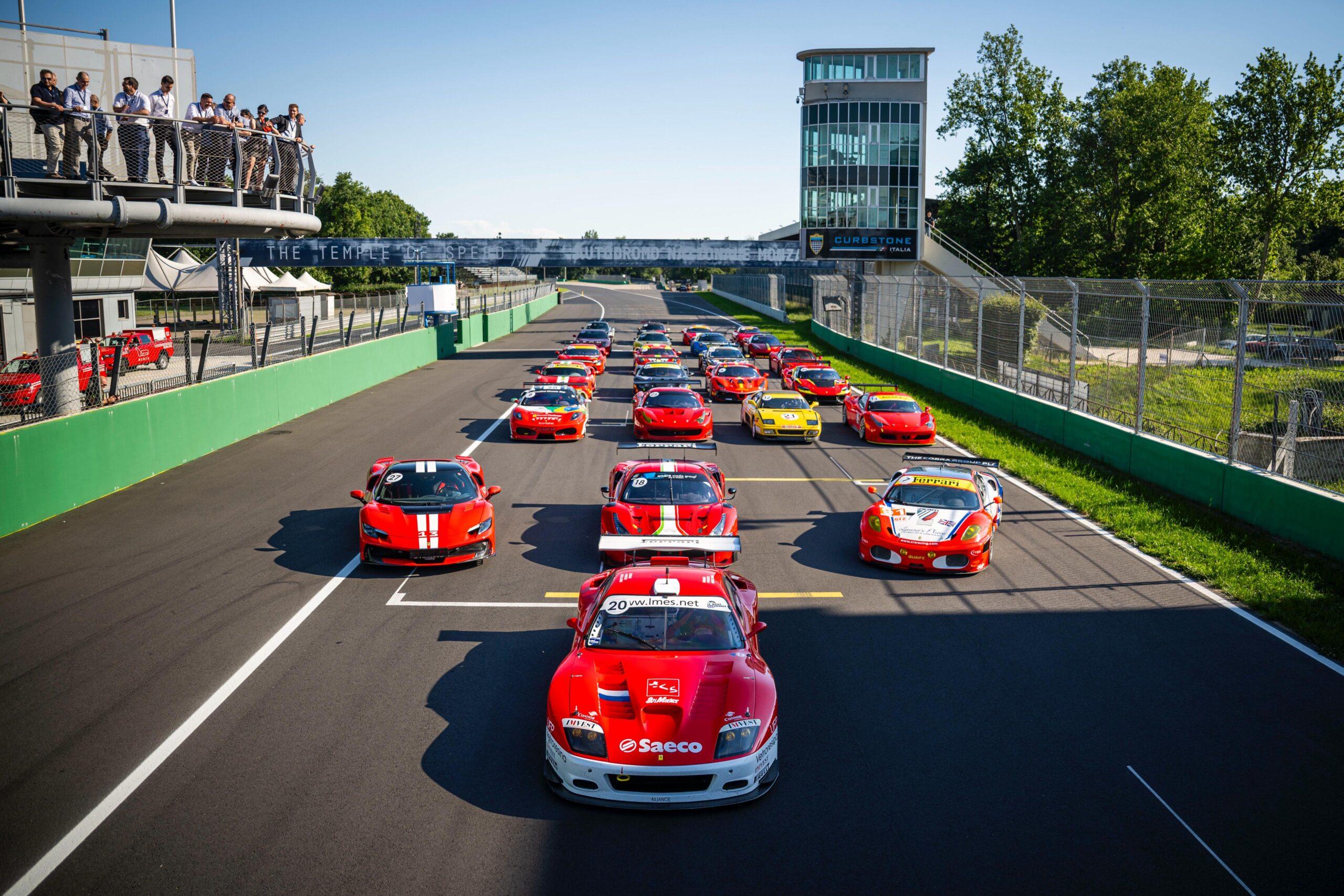
17.35 -18.00 Foto session at the starting grid

Group 1 total 60 Min.

Group 2 total 180 Min.

Group 3 total 175 Min.

Group 4 total 175 Min.

19.30 Gala evening at the fantastic Ristorante Saint Georges Premier directly in the “Parco di Monza”


*Timetable Day Two Wednesday 21 of May – Drivetime:

09.00 – 09.25 Group 1

09.30 – 10.40 Group 2

10.45 – 12.00 Group 3 and 4

12.00 – 13.30 Lunch break

13.35 – 13.55 Group 1

14.00 – 15.00 Group 2

15.05 – 16.00 Group 3 and 4

16.05 – 16.25 Group 1

16.30 – 18.00 Open pitlane for group 2,3 and 4

Groupe 1 total 60 Min.

Group 2 total 220 Min.

Group 3 total 220 Min.

Group 4 total 220 Min.

*The schedule is not fixed and can be adapted any time


In total there is on track for every group: 

Group 1 – 120 Min

Group 2 – 400 Min.

Group 3 – 395 Min.

Group 4 – 395 Min. 


Groups and eligible Ferraris*

Group 1 – All Road going Ferraris

Group 2 – 1993 to 2006: Ferrari Challenge/GT – Challenge 348/355/360/430/458/488 and the new 296 inkl. the Michelotto 348 GTC / LMs, the 360 GTs N-GT, GT, GTC,  430 GT3/GT (on invitation for Maserati Ghibli Open Cup and Trofeo Race Cars). Also Ferrari 512 BB LM, F40 GT/LM/GTE, 333 SP, 550 GTC, 575 GTC and similar GTs incl. the and Maserati MC 12 GT1 (please ask for different and older Ferraris)

Group 3 – 2006 to 2026: Ferrari Challenge/GT – 430/458/488 Challenge inkl. 430 GT3/GT2, 458 GT3/GT2, 488 Challenge/GT3/GT2, 296 Challenge and GT3

Group 4 –  Endurance Racing Legends or similar racing cars from the 1990s to the 2000s. Mc Laren, Mercedes, Porsche etc. – WELCOME!

* The final grouping will take place at the event and can be changed any time

Challenge and GT Days 2026 – NEWS

Dear friends, only three month to the closing date for the 9th Edition oft he Challenge and GT Days 20 and 21 of May 2026 at the „temple of spped“ in MONZA.

At the moment we are around 30 cars and groups are filling quickly, but if you have not made the „Registration“ jet, please https://www.fchgt.com/registration/ (still possible in all classes!)

General information about the event https://www.fchgt.com/challenge-and-gt-days-2026/

See you at the Challenge and GT Days 2026 – Forza Ferrari

For sale – 1995 Ferrari F355 Challenge

All informations an more pictures HERE at Classic Driver

Price 279.900,– EUR

  • Kilometerstand  31 809 km / 19 766 mi
    One of only 108 factory-built Ferrari F355 Challenge cars
    Road registered!
    Extremely rare Nero Carbonio Metallizzato paint

In the early 1990s, Ferrari did something that feels almost impossible to imagine today. The factory created a racing series not for professional drivers, but for passionate owners who wanted to experience real competition without giving up the essence of a road car. The Ferrari Challenge was born from that idea. It was never about spectacle or marketing. It was about driving, development, and preserving Ferrari’s racing DNA in its purest form. These were cars you could drive to the circuit, race hard, and drive home again. When the F355 Challenge was introduced in 1995, it marked the high point of that philosophy. It was the final generation of Ferrari Challenge cars based directly on a road model and powered by a naturally aspirated engine. The five valve per cylinder 3.5 litre V8, with its unmistakable sound and eagerness to rev, defines an era many consider Ferrari at its absolute best.

The car we are offering is one of only 108 factory built Ferrari F355 Challenge cars. Finished in Nero Carbonio Metallizzato FER 901/C, it stands apart even among other Challenge examples. Finished in the extremely rare Nero Carbonio Metallizzato FER 901/C, this F355 Challenge is in a class of its own. While nearly all were delivered in Rosso Corsa, this factory confirmed colour makes it genuinely exceptional and significantly more collectible.

Just as important, this F355 Challenge is road legal and was genuinely road registered from new. It is not a later track conversion, but a period correct, street legal Challenge car exactly as Ferrari intended when the series was created. As an early, first generation example, it is equipped with the highly sought after Bosch Motronic M2.7 engine management system. Among knowledgeable enthusiasts, this configuration is widely regarded as the most responsive and pure setup of the F355 Challenge. Throttle response is immediate, the engine feels alive at all times, and the overall character is raw in the best possible way. Delivered new through Cornes and Co. Ltd. in Tokyo, Ferrari’s official importer in Japan since 1976, It was registered for road use and maintained under the strict Shaken inspection regime, with multiple recorded inspections carried out at the same accredited workshop. The official export deregistration issued by the Tokyo Land Transport Bureau confirms beyond doubt that this is a legitimate period road registered Challenge car.

What truly sets this car apart is its exceptional level of originality, with a remarkable amount of factory correct detail rarely seen on F355 Challenge cars today. It retains its correct Speedline Corse magnesium wheels with proper codes and original stickers still visible on the inside, as well as all defining Challenge components exactly as intended, including the fire extinguisher, engine cut off switch, correct tow hook, rear quick release fasteners and the correct black Challenge rear grille. All windows remain the correct original Ferrari SIGLA glass with logos, including the rear screen with its etched VIN marking. The original OMP roll cage is still in place with its period stickers, together with FIA approved OMP safety harnesses. The car also retains its correct carbon racing seat, type VID CARBON CS.665.95, in original red upholstery with its labels still present, combined with the correct leather passenger seat. This original mixed configuration is now rarely seen, as many examples have since been converted to either two comfort seats or two full Challenge seats. The condition of the body is equally impressive, free from corrosion, and further supported by the presence of original body assembly markings.

Open the driver’s door and you immediately understand what this car is about. The carpets are gone, bare metal surrounds you, the roll cage dominates the cabin and there is nothing left that distracts from the art of driving. You settle into the seat, take hold of the compact racing steering wheel and turn the key. The engine fires instantly, settling into a clean, steady idle before erupting into one of the most unforgettable sounds Ferrari has ever produced. Loud and razor sharp, this is a V8 that does simply sings in a way no modern Ferrari ever can.

The throttle response is instant. With around 1,355 kilos to move, the car reacts immediately to everything you do. The open gated manual gearbox feels exactly how a Ferrari should feel: mechanical, precise and deeply satisfying. Let the revs climb and the V8 just keeps pulling, all the way to 8,500 rpm, screaming in a way that makes you want to do it again and again. The brakes, using components from the Ferrari F40, are powerful and confidence inspiring. What makes this F355 Challenge truly unique is how raw and honest it is. It is loud, intense and emotional, yet still road legal and usable. This is the kind of Ferrari people talk about when they say “they don’t build them like this anymore.

This is not a Ferrari you encounter often, but it is without question one of the most engaging and uncompromised Ferraris that can still be driven legally on public roads. Rare, authentic and built to be driven rather than merely admired. For those who understand what makes a truly great Ferrari, this is a very special opportunity.

For sale – 2018 Ferrari FXX


For sale by Gooding Christie’s at Retromobile Paris Auction – 2018 Ferrari FXX

All details and more pictures HERE at Gooding Chriestie’s

Estimate 5.500.000 – 6.500.000 Euro

For complete information, including the full lot description, applicable VAT (rules and rates), and any saleroom notices or addenda, please refer to the official lot description on christies.com.

Ferrari’s XX Programme has long represented the company’s most advanced and uncompromising expression of research and development, an arena where Maranello removes every constraint of road homologation and competitive regulation to explore the outer limits of performance. Beginning with the FXX in 2005 and later expanded with the 599XX, the programme invited a select number of Ferrari’s most committed clients to participate directly in vehicle development through exclusive, factory-supported track sessions. In these controlled environments, engineers gathered real time telemetry while owners functioned as genuine test drivers, shaping future innovations.

When Ferrari introduced hybrid technology into its road-going flagship LaFerrari, it was inevitable that this new frontier would form the basis of the next XX model. The result was the FXX K, which Ferrari described as “the most extreme expression of LaFerrari,” a clear signal that the car was designed to push beyond anything previously achieved in the programme.

Although derived conceptually from LaFerrari, the FXX K was engineered from the beginning as a track-only prototype without compromise. Ferrari stated that “the FXX K was designed exclusively for track use and is not intended for competition or road homologation,” an important distinction that freed the engineers to pursue absolute performance. The familiar 6.3-liter V-12 was extensively reworked with new camshafts, mechanical valve actuation, redesigned intake ducts, and a dedicated exhaust system “created exclusively for track use.”

Paired with the HY-KERS energy recovery system, the powertrain delivered extraordinary output. As Ferrari confirmed, “Total power is 1050 hp, 860 from the V-12 engine and 190 from the electric motor.” This hybrid system was not a fuel-saving tool, but a dynamic performance enhancer, allowing instantaneous torque fill, regenerative braking, and strategic deployment tailored to circuit conditions. The driver could select from four hybrid modes via a steering wheel mounted manettino, with Ferrari noting the options as “Qualify, Long Run, Manual Boost, and Fast Charge,” each suited to a specific performance requirement.

The FXX K’s aerodynamic package represented another major departure from its road-going sibling. Ferrari emphasized that the model “adopts a series of active and passive aerodynamic solutions that ensure exceptional downforce and efficiency on the track.” The car employed a deep front splitter, vertical vortex generators, expanded underbody channels, and a distinctive twin fin rear structure supporting an elevated spoiler element. These features collectively delivered dramatic aerodynamic load across a wide speed range. The chassis, suspension, brakes, and tire construction were each tuned to operate with the demands of both high downforce and hybrid assistance, resulting in a machine that was both violent in acceleration and remarkably composed through high speed corners.

In keeping with the philosophy of the XX Programme, owners of the FXX K participated in exclusive track events organized by Ferrari’s Corse Clienti division. Ferrari described the programme succinctly, stating that it “allows a small group of Clients to become real Ferrari test drivers.” At these events, engineers downloaded telemetry, assessed battery behavior, monitored mechanical systems under extended stress, and provided detailed feedback to drivers. Each session served as both a development test and a driver training exercise, reinforcing the collaborative nature of the programme.

After two seasons of development and thousands of kilometers of running, Ferrari introduced the next evolution of the platform, the FXX K Evo, in 2017. The Evo package represented a comprehensive advancement of the original FXX K. The most visible updates centered on aerodynamics. Ferrari created a new fixed rear wing element mounted above a dual fin structure, paired with a completely reprofiled rear diffuser and a sharper, more aggressive front section. These revisions produced staggering aerodynamic benefits. Ferrari disclosed that the FXX K Evo “generates 640 kg of downforce at 200 km/h,” a figure comparable to that achieved by contemporary GT race cars. The company also stated that “the Evolution package increases overall downforce by 23 percent compared to the standard FXX K,” while delivering roughly 75 percent more downforce than LaFerrari.

Weight reduction was another key component of the Evo update. Through more extensive use of carbon fiber in the wings, underbody, and cockpit structures, Ferrari trimmed mass compared with the original FXX K. The hybrid control systems were recalibrated to optimize torque delivery under the increased aerodynamic load, and the differential, traction control, stability logic, and energy recovery algorithms were each refined to maintain balance at higher cornering speeds. The steering wheel was redesigned with a layout inspired by Formula 1, incorporating additional controls for hybrid management and chassis settings. The cockpit display was updated to provide clearer information on battery charge state, energy deployment, and real time telemetry.

Although Ferrari has not disclosed exact production figures for the FXX K or FXX K Evo, consistent with the secrecy maintained around the XX Programme, most authoritative sources estimate that approximately 40 examples of the FXX K were produced, with the majority later upgraded to Evo specification once the package was introduced in 2017. A small number of cars are believed to have been assembled directly in Evo form by the factory. Regardless of the precise total, the FXX K Evo remains one of the rarest and most advanced experimental models in Ferrari’s history, and represents the pinnacle of hybrid era development within the programme.

Finished in Nero (Black) over a Nero (Black) Alcantara interior, this particular Ferrari FXX K Evo example is particularly notable, as one of the very few FXX K cars completed by Ferrari directly in Evo specification rather than converted from an earlier build. As such, it represents the ultimate and most advanced expression of the model as conceived within the XX Programme. Remarkably, this factory-born Evo remains in exceptionally preserved condition, having never participated in any XX Programme events. It showed just 95 km at the time of cataloguing, all at Fiorano – 80 km from its 2018 shakedown and another 15 km logged during its March 2025 Maranello maintenance visit. Nonetheless, it received an extensive servicing by Ferrari in July 2025, with invoices on file totaling over €145,000.

As a model, the FXX K Evo stands at the convergence of Ferrari’s Formula 1-derived hybrid technology and its most advanced road-car research. It unites a naturally aspirated V-12 with electric torque enhancement, merges computational aerodynamics with immense mechanical downforce, and pairs driver involvement with a continuous stream of telemetry analysis. More than any previous XX model, the FXX K Evo demonstrates Ferrari’s conviction that the future of extreme performance rests in the seamless integration of powertrain innovation, energy management, aerodynamics, and advanced control systems.

As offered here, including wheeled accessory boxes, this Evo would make an outstanding acquisition for any supercar enthusiast or devoted marque aficionado. Its next caretaker can expect a warm welcome at Ferrari’s marque-focused concours d’elegance and Corse Clienti events, or simply explore the car’s remarkable capabilities on circuit. It offers what must be an unrepeatable opportunity to acquire an essentially new example of Ferrari’s most sophisticated hybrid-era development prototype.

Le Programme XX de Ferrari représente depuis longtemps l’expression la plus évoluée et radicale des efforts de recherche et développement de la marque, un terrain de jeu sur lequel Maranello s’affranchit de toutes les contraintes liées à une homologation routière ou aux réglementations sportives pour explorer les limites extrêmes de la performance. Dans le cadre de ce programme, qui a commencé en 2005 avec la FXX avant de s’élargir avec la 599XX, un nombre limité de clients parmi les plus fidèles du Cheval cabré étaient invités à participer directement à la mise au point des véhicules dans le cadre de séances exclusives sur circuit avec l’assistance de l’usine. Dans ces environnements contrôlés, les ingénieurs collectaient les données de télémétrie en temps réel tandis que les propriétaires agissaient comme de véritables pilotes d’essai et préparaient les futures innovations.

Lorsque Ferrari a lancé la technologie hybride avec sa LaFerrari, son modèle routier phare, cette nouvelle frontière allait irrémédiablement constituer le nouveau point de départ pour la prochaine itération du Programme XX. La FXX K était née. Pour Ferrari, il s’agissait de « l’expression la plus extrême de la LaFerrari », un signal clair annonçant une voiture conçue pour dépasser tout ce qui avait été réalisé jusqu’alors avec ce programme.

Même si le concept s’inspirait de la LaFerrari, la FXX K a été conçue dès le départ comme un prototype sans compromis, exclusivement réservé à la piste. Ferrari a expliqué que « la FXX K a été pensée uniquement pour une utilisation sur circuit et n’est pas destinée à la compétition ou à une homologation routière », une caractéristique clé qui a permis aux ingénieurs de rechercher la performance absolue. Le bien connu V12 de 6,3 litres a été largement retravaillé : nouveaux arbres à cames, actionneurs mécaniques pour la levée des soupapes, conduits d’admission repensés et système d’échappement dédié « créé exclusivement pour un usage sur piste ».

Avec le système de récupération d’énergie HY-KERS en complément, le groupe motopropulseur atteignait une puissance exceptionnelle. La marque l’a confirmé : « La puissance totale est de 1050 ch, 860 pour le V12 et 190 pour le moteur électrique. » Ce système hybride n’était pas destiné à réduire la consommation de carburant, mais à améliorer les performances dynamiques en apportant un couple instantané, un freinage régénératif et un déploiement stratégique de la puissance adapté à l’utilisation sur circuit. Le pilote pouvait choisir entre quatre modes hybrides à l’aide du manettino installé sur le volant. Ferrari proposait les options « qualification », « long relais », « boost manuel » et « charge rapide », chacune étant adaptée à un besoin de performance particulier.

Le package aérodynamique de la FXX K apportait lui aussi une autre rupture majeure par rapport au modèle routier dont elle était inspirée. Ferrari a souligné que ce modèle adoptait « une série de solutions aérodynamiques actives et passives garantissant un appui aérodynamique et une efficacité exceptionnels sur la piste ». À l’avant, la voiture faisait appel à une imposante lame, associée à des générateurs de vortex verticaux, à des canaux élargis sous le plancher et à une structure arrière spécifique avec deux ailerons complétant un spoiler surélevé. Mises bout à bout, ces caractéristiques assuraient une charge aérodynamique impressionnante sur une large plage de vitesses. Le châssis, les suspensions, les freins et la conception des pneus étaient également tous réglés pour fonctionner malgré les exigences provoquées par l’appui élevé et l’hybridation. La machine qui en résultait était à la fois agressive dans ses accélérations et remarquablement maîtrisée dans les virages à grande vitesse.

Fidèles à l’esprit du Programme XX, les propriétaires de FXX K ont participé à des événements exclusifs sur circuit organisés par la division Corse Clienti de Ferrari. Dans une description rapide de ce programme, la marque affirmait qu’il permettait « à un petit groupe de clients de devenir de véritables pilotes d’essai Ferrari ». Lors de ces événements, les ingénieurs téléchargeaient les données de télémétrie, évaluaient le comportement des batteries, surveillaient les systèmes mécaniques soumis à des contraintes prolongées et fournissaient des retours détaillés aux pilotes. Chaque séance servait à la fois de test pour le développement des modèles et de cours de formation pour les pilotes, ce qui renforçait la nature collaborative du programme.

Après deux saisons de développement et des milliers de kilomètres parcourus, Ferrari a lancé, en 2017, l’évolution suivante de cette plateforme, la FXX K Evo. La version Evo apportait des progrès sur tous les plans par rapport à la FXX K originale. Les améliorations les plus visibles portaient notamment sur l’aérodynamique. Ferrari a créé un nouvel aileron arrière fixe monté au-dessus d’une structure à double dérive et associé à un diffuseur arrière au profil entièrement revu et à une section avant plus tranchante et agressive. Les bénéfices apportés par ces modifications sur le plan aérodynamique étaient impressionnants. D’après Ferrari, la FXX K Evo « génère 640 kg d’appui aérodynamique à 200 km/h », un chiffre comparable à ce que produisent les GT de compétition contemporaines. La marque a également déclaré que « le pack Evolution augmente l’appui aérodynamique global de 23 % par rapport à la FXX K standard », tout en générant environ 75 % d’appui en plus par rapport à une LaFerrari.

L’allègement a été un autre point clé des améliorations de l’Evo. En utilisant plus largement la fibre de carbone dans les ailes, les soubassements et les structures du cockpit, Ferrari a réduit le poids par rapport à la FXX K d’origine. Les systèmes de commande hybrides ont été recalibrés pour optimiser la distribution au regard de la charge aérodynamique supplémentaire, et les algorithmes de différentiel, de contrôle de traction, de logique de stabilité et de récupération d’énergie ont tous été affinés pour maintenir un comportement équilibré à des vitesses de virage plus élevées. Le volant a été modifié et adoptait une disposition inspirée de la Formule 1, intégrant des commandes supplémentaires pour la gestion hybride et les réglages du châssis. L’affichage dans le cockpit a été actualisé pour fournir des informations plus claires sur l’état de charge de la batterie, le déploiement d’énergie et la télémétrie en temps réel.

Même si, en raison du secret qui entoure le Programme XX, Ferrari n’a divulgué aucun chiffre précis concernant la production de la FXX K ou de la FXX K Evo, la plupart des sources dignes de confiance estiment à environ 40 exemplaires le nombre de FXX K fabriquées, la majorité d’entre elles ayant ensuite été actualisées selon les spécifications Evo après le lancement de ce pack, en 2017. Quelques voitures seulement auraient été assemblées directement en version Evo par l’usine. Indépendamment du nombre total d’exemplaires, la FXX K Evo reste l’un des modèles expérimentaux les plus rares et les plus avancés de l’histoire de Ferrari. Elle constitue le paroxysme du développement de l’ère hybride dans le cadre de ce programme.

De couleur Nero (noir) associée à un intérieur Alcantara Nero (noir), cet exemplaire particulier de Ferrari FXX K Evo est particulièrement remarquable, car il s’agit de l’une des très rares FXX K fabriquées directement par Ferrari selon les spécifications de la version Evo et non pas d’un modèle converti a posteriori. Elle représente donc l’expression ultime et la plus avancée du modèle tel qu’il a été conçu au sein du Programme XX. Fait remarquable, cette Evo d’usine soit restée dans un état aussi exceptionnellement préservé, car elle n’a jamais participé à aucun événement du Programme XX. Son compteur n’indiquait que 95 km au moment du catalogage, tous parcourus sur le circuit de Fiorano, à savoir 80 km pour ses premiers réglages en 2018 et 15 km supplémentaires réalisés lors de sa visite d’entretien à Maranello en mars 2025. Elle a tout de même bénéficié d’un entretien significatif chez Ferrari en juillet 2025, comme l’attestent des factures d’un montant total de plus de 145 000 €.

La FXX K Evo est un modèle situé au point de rencontre entre la technologie hybride dérivée des monoplaces de Formule 1 de Ferrari et les recherches les plus en pointe sur les voitures de route. Le couple de son V12 atmosphérique est complété par un renfort électrique et elle fusionne l’aérodynamique calculée par ordinateur avec un colossal niveau d’appui mécanique. Enfin, elle associe les retours apportés par le pilote à un flux continu d’analyse télémétrique. Plus que tout autre modèle précédent du Programme XX, la FXX K Evo démontre la conviction claire de Ferrari : l’avenir des performances extrêmes repose sur l’intégration fluide de l’innovation en matière de motorisation, de la gestion de l’énergie, de l’aérodynamique et des systèmes de contrôle avancés.

Telle qu’elle est proposée ici, avec ses boîtes d’accessoires montées sur roues, cette Evo constitue une acquisition exceptionnelle pour tout amateur de supercars ou passionné de la marque. Son prochain gardien pourra tabler sur un accueil chaleureux lors du concours d’élégance centré sur le Cheval cabré et d’événements du service Corse Clienti, ou simplement explorer les capacités remarquables de cette voiture sur piste. Elle représente une opportunité assurément unique d’acquérir un exemplaire pratiquement neuf du prototype de développement hybride le plus sophistiqué de Ferrari.

For sale – 2008 Ferrari FXX

For sale by Gooding Christie’s at Retromobile Paris Auction – 2008 Ferrari FXX

All details and more pictures HERE at Gooding Christie’s

Estimate 4.500.000 – 5.500.000 Euro

Chassis ZFFHX62X000162628

For complete information, including the full lot description, applicable VAT (rules and rates), and any saleroom notices or addenda, please refer to the official lot description on christies.com.

Ferrari’s longstanding practice of advancing its most sophisticated technologies through tightly focused experimental platforms reached a defining milestone with the introduction of the XX Programme in 2005. Conceived not as a homologated road car nor as a competition machine, the FXX was envisioned as a pure development tool, created to accelerate engineering progress by pairing factory-controlled testing with real-time driver input, gathered under precisely managed track conditions.

Ferrari made its intentions clear from the outset. As General Manager Amedeo Felisa stated during development, “The FXX will not be raced. It is a test car only.” That principle defined the XX Programme. Each FXX was equipped with an extensive telemetry suite capable of recording hundreds of parameters, including throttle and brake inputs, steering angle, suspension movement, tire temperature, load distribution, and thermal behavior across the chassis. After every session, owners were debriefed in a manner similar to Formula 1 drivers, reviewing their data directly with Ferrari engineers. It was an unprecedented partnership between factory and client, transforming owners from customers into active participants in Ferrari’s research effort.

Although the FXX shared the broad structural layout of the Enzo, it was essentially a new machine. Its naturally aspirated 6.2-liter V-12 produced 800 hp – made possible through redesigned cylinder heads, revised intake geometry, new cam profiles, and a significantly freer flowing exhaust system. The updated F1-style gearbox delivered remarkably rapid shifts. As Motor Trend noted in its January 2006 review, “the shifts are so fast, you don’t feel them as much as hear them,” a comment that captured the mechanical character of the car. The carbon fiber and Nomex honeycomb monocoque remained, but stripped of all comforts, and paired with race developed suspension, carbon ceramic Brembo brakes, and bespoke 19″ Bridgestone racing slicks created solely for the programme.

From inside the cockpit, the sensation was even more extreme. Motor Trend described the view through the wraparound glass as “a windshield curved like a fishbowl, and we are the fish,” a vivid illustration of the FXX’s immersive, transparent environment. Even the act of starting the car was dramatic. The same review reported that “the 6.3 liter V-12 fires to life with a sound so violent the people standing along the pit wall actually recoil.” Nothing about the FXX was softened or muted – every detail was engineered for response and immediacy.

Performance confirmed the success of this experimental approach. Ferrari estimated that the FXX was six seconds per lap faster than the Enzo around Fiorano – a staggering figure that demonstrated how far the programme had advanced the platform. Thousands of test kilometers, including sessions driven by Michael Schumacher, yielded a wealth of data that informed the next major step forward, the FXX Evoluzione.

Introduced in 2007, the Evoluzione was a comprehensive refinement of the original concept and improved virtually every system. The V-12 now produced 860 hp at 9,500 rpm, supported by revised internals and updated engine management software. The F1- style gearbox received new programming that reduced upshift times to 60 milliseconds and featured revised gear ratios tailored to the expanded power band.

Aerodynamics were significantly reworked. A reshaped rear wing, revised extractors, the addition of a small “nolder” (a sharp aerodynamic lip used to control airflow), and extensive underbody revisions increased overall aerodynamic efficiency by about 25%. These changes produced greater downforce, improved high speed stability, and allowed a more precise turn in response. Ferrari also updated the suspension geometry to reduce tire wear and enhance balance through demanding corners, while revised cooling channels promoted more consistent braking performance during extended sessions.

The Evo also introduced an expanded telemetry system with new channels for steering angle, brake pump pressure, and broader mapping of dynamic loads. This allowed Ferrari engineers to study behavior with exceptional detail and made the Evo not only faster but more insightful as a development instrument. Many concepts tested through the FXX and Evo would influence Ferrari’s future hypercars, most notably the LaFerrari and subsequent XX models, including the 599XX and the FXX K.

Production of the FXX was extremely limited, with Ferrari building approximately 30 examples between 2005 and 2008. Most of these cars were later upgraded to Evoluzione specification when Ferrari introduced the Evo package in 2008. Only a very small number, however, are believed to have been completed by the factory directly in Evo form rather than converted from earlier FXX builds. Exact figures have never been formally released by Ferrari, but the consensus among marque historians is that factory- born Evoluzione cars represent a tiny fraction of overall FXX production and remain among the rarest and most technically significant models in the programme.

This Ferrari FXX Evo is one of the very small number of cars originally built in Evoluzione specification rather than converted from an FXX. Originally delivered in Rosso (Red) with a minimalist racing interior trimmed in Nero (Black) Alcantara, this car was later refinished in black, matching the consignor’s FXX K Evo (also offered in this sale, Lot 40) as well as the black FXX presented to Michael Schumacher in September 2006 to mark his impending retirement from Formula 1.

As part of Ferrari’s exclusive XX Programme, this FXX has enjoyed measured and documented use in the factory’s controlled test-driver environment. Its early programme participation is recorded in 2008, when it logged 180 km at Mugello, 58 km at the Nürburgring, and 166 km during the Finali Mondiali at Mugello, for a total of 404 km that year. After a period of inactivity, the car returned to XX events in 2019, accumulating 112 km across Fiorano, Vallelunga, and the Finali Mondiali. Most recently, the car completed a further 9 km at Fiorano in May 2025.

The car received major factory servicing at Ferrari in June this year totaling more than €24.800, with documentation on file. This example represents one of the rarest and most coveted forms of Ferrari’s XX experimentation, and is accompanied by wheeled accessory boxes. Factory-born Evoluzione cars seldom appear on the market, and this example offers a compelling opportunity to acquire one of Maranello’s most exclusive and technically ambitious machines – an automobile that encapsulates the developmental DNA of Ferrari’s modern hypercar era and stands among the defining achievements of the XX Programme.

Ferrari a presque toujours fait progresser ses technologies les plus avancées à l’aide de plateformes expérimentales extrêmement concentrées. Cette philosophie a franchi un cap déterminant avec le lancement du programme XX en 2005. Conçue non pas comme une voiture homologuée pour la route ni comme une machine de compétition, la FXX était destinée à être un pur outil de développement, créé pour accélérer les progrès techniques en associant des séances d’essais contrôlées par l’usine à des retours en temps réel des pilotes, collectés sur des conditions de piste déterminées avec précision.

Ferrari a clairement exprimé ses intentions dès le départ. Son directeur général, Amedeo Felisa, l’a expliqué noir sur blanc pendant son développement : « La FXX ne sera pas alignée en compétition. C’est uniquement une voiture d’essai. » C’est ce principe qui a défini le Programme XX. Chaque FXX était équipée d’un vaste ensemble de capteurs de télémétrie capables d’enregistrer des centaines de paramètres, notamment la pression sur l’accélérateur et le frein, l’angle de braquage, les mouvements de la suspension, la température des pneus, la répartition de l’appui et le comportement thermique sur l’ensemble du châssis. À l’issue de chaque séance, les propriétaires étaient débriefés de la même manière que des pilotes de Formule 1. Ils examinaient leurs données directement aux côtés des ingénieurs Ferrari. Il s’agissait d’un partenariat inédit entre l’usine et ses clients. Les propriétaires n’étaient alors plus seulement des clients, mais devenaient des acteurs à part entière du processus de recherche de Ferrari.

Bien que la FXX reprenne une grande partie de la structure de l’Enzo, il s’agissait quasiment d’une nouvelle machine. Son V12 atmosphérique de 6,2 litres produisait 800 ch, grâce à des culasses repensées, à une admission à la géométrie révisée, à des arbres à cames au profil retravaillé et à un système d’échappement nettement plus libre. La boîte de vitesses modernisée de style F1 permettait des changements de vitesses d’une rapidité remarquable. Comme l’a indiqué le magazine Motor Trend dans son essai de janvier 2006 : « les passages de vitesses sont si rapides qu’on ne les ressent pas autant qu’on les entend », un commentaire qui illustrait parfaitement le caractère mécanique de la voiture. La monocoque en fibre de carbone et en nid d’abeille Nomex a été maintenue. En revanche, tous les éléments de confort ont été retirés et la voiture a été équipée d’une suspension développée pour la compétition, de freins Brembo en carbone céramique, et de pneus slicks de course Bridgestone 19 pouces sur mesure créés uniquement pour le programme.

À l’intérieur, les sensations étaient encore plus extrêmes. Pour décrire la vue à travers le pare-brise enveloppant, Motor Trend évoquait un « un pare-brise courbé comme un aquarium dans lequel le poisson, c’est vous », ce qui illustre à merveille l’environnement immersif et transparent de la FXX. Même le simple fait de démarrer la voiture était théâtral. Dans le même essai, on pouvait lire que « le V12 de 6,3 litres s’anime avec un son si violent que les personnes situées le long du muret des stands sont littéralement repoussées ». Rien dans la FXX n’était adouci ou atténué, chaque détail étant pensé pour la réactivité et l’instantanéité.

Les performances sont venues confirmer le succès de cette approche expérimentale. Selon Ferrari, la FXX parvenait à boucler un tour du circuit de Fiorano en six secondes de moins que l’Enzo, un résultat stupéfiant qui montrait à quel point le programme avait fait progresser cette plateforme. Des milliers de kilomètres d’essai, notamment des séances avec Michael Schumacher au volant, ont généré une somme colossale de données qui ont guidé la grande étape suivante, la FXX Evoluzione.

Lancée en 2007, l’Evoluzione représentait une amélioration complète du concept original qui portait sur pratiquement tous les systèmes. La puissance du V12 était portée à 860 ch à 9 500 tr/min, grâce à des composants internes révisés et à un logiciel de gestion moteur mis à jour. La boîte de vitesses F1 a été reprogrammée pour réduire les temps de passage à 60 millisecondes et les rapports ont été modifiés pour correspondre à la plage de puissance élargie.

L’aérodynamique a été significativement retravaillée. L’aileron arrière a été redessiné et les extracteurs révisés, un petit becquet (un appendice aérodynamique destiné à contrôler le flux d’air) a été ajouté. Enfin, d’importantes modifications du plancher ont été réalisées pour une augmentation globale de 25 % de l’efficacité aérodynamique. Ces améliorations ont permis d’augmenter l’appui, de renforcer la stabilité à haute vitesse et d’obtenir un comportement plus précis en virage. Ferrari a également revu la géométrie des suspensions pour réduire l’usure des pneus et améliorer l’équilibre dans les virages exigeants. En outre, une modification des écopes de refroidissement a permis des performances de freinage plus constantes lors des séances prolongées.

L’Evo incluait également un système de télémétrie étendu, comprenant de nouveaux canaux pour l’angle de braquage, la pression de freinage et une cartographie élargie des charges dynamiques. Les ingénieurs Ferrari pouvaient ainsi étudier le comportement de la voiture avec un niveau de détail exceptionnel. L’Evo était alors non seulement plus rapide, mais aussi plus utile en tant qu’instrument de développement. De nombreux concepts testés grâce à la FXX et à la version Evo allaient influencer les futures hypercars de Ferrari, notamment la LaFerrari et les modèles XX suivants, dont la 599XX et la FXX K.

La production de la FXX a été extrêmement limitée puisque Ferrari n’en a fabriqué qu’une trentaine d’exemplaires entre 2005 et 2008. La plupart de ces voitures ont ensuite reçu des modifications correspondant à la version Evoluzione lorsque Ferrari a lancé le pack Evo, en 2008. Néanmoins, seulement une poignée d’exemplaires auraient directement été construits dans la version Evo, au lieu de partir de conversions de FXX originelles. Ferrari n’a jamais publié de chiffres exacts, mais les historiens de la marque s’accordent sur le fait que les modèles Evoluzione d’usine représentent une infime fraction de la production totale de FXX et constituent encore aujourd’hui des modèles parmi les plus rares et les plus techniquement significatifs du programme.

Cette Ferrari FXX Evo fait ainsi partie des très rares voitures construites dès le départ selon les spécifications Evoluzione à la différence des conversions à partir d’une FXX standard. Livrée à l’origine dans une teinte Rosso (rouge) associée à un intérieur de course minimaliste garni d’Alcantara Nero (noir), cette machine a ensuite été repeinte en noir, pour correspondre à la FXX K Evo du transitaire (également proposée dans cette vente, Lot 40) ainsi qu’à la FXX noire offerte à Michael Schumacher en septembre 2006 à l’occasion de sa retraite imminente de la Formule 1.

Dans le cadre de l’exclusif Programme XX de Ferrari, cette FXX a bénéficié d’une utilisation modérée et documentée lors d’essais contrôlés par l’usine. Les archives indiquent que sa première participation au programme remonte à 2008. Elle a alors parcouru 180 km au Mugello, puis 58 km au Nürburgring et 166 km lors des Finali Mondiali au Mugello, pour un total de 404 km cette année-là. Après une période d’inactivité, la voiture a retrouvé le Programme XX en 2019, accumulant 112 km sur les circuits de Fiorano et Vallelunga et lors des Finali Mondiali. Plus récemment, elle a parcouru 9 km supplémentaires à Fiorano en mai 2025.

La voiture a fait l’objet d’une révision majeure d’usine chez Ferrari en juin dernier, pour un montant total de plus de 24 800 €, comme l’attestent les documents joints au dossier. Cet exemplaire représente l’une des machines les plus rares et les plus recherchées du programme expérimental XX de Ferrari ; il est accompagné de boîtes d’accessoires montées sur roues. Les modèles Evoluzione d’usine apparaissent rarement sur le marché, et cet exemplaire offre une opportunité exceptionnelle d’acquérir l’une des voitures les plus exclusives et techniquement ambitieuses de Maranello, une automobile qui incarne pleinement l’ADN de Ferrari en matière de développement de ses hypercars modernes et figure parmi les réalisations majeures du Programme XX.

For sale – 2013 Ferrari 458 GTE


For sale by Gooding Christie’s at Retromobile Paris Auction – 2013 Ferrari 458 GTE

All details and more pictures HERE at Gooding Christie’s

Estimate

€1,200,000 – €1,450,000

Chassis 2868

Engine 028


Car Highlights

One of Only 52 Examples of the 458 GTE Built by Michelotto S.p.A

Delivered New to the Legendary Team Taisan of Japan

The 2013 ACO Asian Le Mans Series Champion

Placed 8th in Class at the 24 Hours of Le Mans in 2014

Eligible for Masters Endurance Legends Series and Legends of Le Mans WEC Support Race

Seulement 52 exemplaires de 458 GTE construits par Michelotto S.p.A

Livrée neuve au Team Taisan, légendaire équipe de course japonaise

Champion de l’ACO Asian Le Mans Series 2013

8e de sa catégorie aux 24 Heures du Mans en 2014

Éligible pour la Masters Endurance Legends Series et les courses de soutien WEC des Légendes du Mans

Technical Specs

4,498 CC DOHC V-8 Engine

Direct Fuel Injection

Estimated 470 BHP at 6,250 RPM

6-Speed Hewland Sequential Gearbox

4-Wheel Brembo Disc Brakes with Steel Rotors

4-Wheel Independent Suspension with Double Wishbones

Moteur V8 de 4 498 cm³, double arbre à cames en tête

Injection directe

Puissance estimée à 470 ch à 6 250 tr/min

Boîte de vitesses séquentielle Hewland à 6 rapports

Freins à disque Brembo aux quatre roues avec disques en acier

Suspensions indépendantes aux quatre roues avec double triangulation

For complete information, including the full lot description, applicable VAT (rules and rates), and any saleroom notices or addenda, please refer to the official lot description on christies.com.


Constructed by Michelotto S.p.A. in Padova – Ferrari’s longtime competition partner and the creator of its most successful modern GT racing machines – this 458 GTE, chassis 2868, stands as one of the most accomplished examples of the marque’s final naturally aspirated GT contender. Just 52 Ferrari 458 GTEs were produced, and among these rare, purpose-built competition cars, few possess a record as complete, impressive, and unblemished as this remarkable Team Taisan-entered machine.

Founded in 1983, Team Taisan is among Japan’s most decorated and enduring privateer racing organizations. Over the course of four decades, the team participated in nearly every major domestic series, including the Fuji Long Distance, JSPC, JTC, and JGTC/Super GT. It was in the latter – Japan’s premier GT championship – that Team Taisan made its most indelible mark, competing in all but one season between 1994 and 2018 and securing eight team titles and four drivers’ championships. The team’s top-level campaigns at GT1 and prototype level saw them field Ferrari F40 LMs and Porsche 962C machinery, while international outings included multiple Le Mans efforts and participation in the Asian Le Mans Series.

Chassis 2868 was delivered new to Team Taisan in 2013 for the inaugural season of the Automobile Club de l’Ouest’s Asian Le Mans Series. Entered as car no. 70 in the LM GTE category, it was driven by ex-Formula 1 stars Kamui Kobayashi and Shinji Nakano, alongside Naoki Yokomizo, Akira Iida, and Shogo Mitsuyama. The car dominated the four-round championship, winning every race outright and earning an automatic invitation to the 24 Hours of Le Mans in 2014 – the first competitor in series history to achieve a perfect season.

For its Le Mans campaign, Team Taisan owner Yasutsune “Ricky” Chiba, due to commitments in Japan, partnered with renowned German endurance specialists Farnbacher Racing. Nakano was joined by Martin Rich and seasoned Le Mans entrant Pierre Ehret, who had already contested the event eight times. Despite starting from the third-to-last position on the grid, the trio drove a determined, faultless race, finishing an impressive 8th in Class and 28th Overall. Crucially, the Ferrari completed the full 24 hours without mechanical retirement – a distinction achieved by only a select group of contemporary GTE entrants.

Following its successful Le Mans appearance, chassis 2868 returned to Michelotto for an extensive post-season refresh, documented by a December 2014 invoice totaling over €47,000. This work included an engine and gearbox rebuild, suspension overhaul, bodywork refinishing, and comprehensive recommissioning. The Ferrari subsequently returned to Japan, where it saw minimal use, and in 2017 was acquired by one of its former Le Mans drivers, who added it to his private collection. Further preparation by Michelotto in 2019, followed by additional specialist work by DK Engineering, Pursuit Racing Ltd., and Stewart Roden Motors between 2023 and 2024, ensures that the car presents today in superb mechanical and cosmetic condition, supported by extensive documentation and a detailed technical dossier. According to the consignor, the Ferrari has had less than five hours of run time since its last comprehensive rebuild.

Accompanying the Ferrari is a substantial package of spares – including wheels, bodywork components, and dedicated tools – along with a Michelotto technical manual and FIA safety-cage homologation papers, resources seldom offered with customer-team GTE machinery. A complete list of spares is available upon request. Chassis 2868 is further enhanced by eligibility for leading modern-endurance series such as Masters Endurance Legends, Endurance Racing Legends, and Ferrari’s Club Competizioni GT, now featured as official support events at select WEC rounds.

A highly original, impeccably documented Ferrari 458 GTE with championship-winning credentials, a strong Le Mans finish, and an exceptional spares package, chassis 2868 stands among the most desirable and versatile GT competition Ferraris of its era.


Construite à Padoue par Michelotto S.p.A., partenaire de longue date de Ferrari en compétition et créateur de ses GT de course modernes les plus performantes, cette 458 GTE, châssis 2868, figure parmi les exemplaires les plus aboutis de la dernière GT atmosphérique de la marque. Seules 52 Ferrari 458 GTE ont été produites, et parmi ces rares voitures de compétition conçues spécialement, peu d’entre elles possèdent un palmarès aussi complet, impressionnant et immaculé que cette remarquable machine engagée par le Team Taisan.

Fondé en 1983, le Team Taisan est l’une des structures privées de compétition les plus titrées et durables du Japon. En 40 ans, l’équipe a participé à presque toutes les grandes séries nationales, y compris la Fuji Long Distance, le JSPC, le JTC et le JGTC/Super GT. C’est dans ce dernier – le championnat GT le plus prestigieux du Japon – que le Team Taisan a imprimé sa marque la plus grande. Entre 1994 et 2018, il a participé à toutes les saisons, sauf une, et a remporté huit titres constructeurs et quatre championnats pilotes. Lors de campagnes de haut niveau en GT1 et dans les catégories prototype, le team a engagé des Ferrari F40 LM et des Porsche 962C. À l’international, il a couru plusieurs fois au Mans et a participé à l’Asian Le Mans Series.

Le châssis 2868 a été livré neuf au Team Taisan en 2013 pour la saison inaugurale de l’Asian Le Mans Series organisée par l’Automobile Club de l’Ouest. Engagée sous le numéro 70 dans la catégorie LM GTE, cette voiture était pilotée par les anciennes stars de la Formule 1 Kamui Kobayashi et Shinji Nakano, aux côtés de Naoki Yokomizo, Akira Iida et Shogo Mitsuyama. Elle a dominé ce championnat en quatre manches, en remportant le classement général de chacune des courses, devenant la première concurrente de l’histoire de la série à réaliser une saison parfaite. Elle a ensuite automatiquement obtenu une invitation aux 24 Heures du Mans en 2014.

Pour cette campagne mancelle, le propriétaire du Team Taisan, Yasutsune « Ricky » Chiba, s’est associé, en raison d’engagements précédents au Japon, aux célèbres spécialistes allemands de l’endurance Farnbacher Racing. Martin Rich et le vétéran des 24 Heures du Mans Pierre Ehret, qui comptait déjà huit participations à cette course, ont rejoint Nakano pour former le trio de pilotes. Malgré une qualification à seulement trois places de la lanterne rouge sur la grille, le trio a mené une course déterminée et sans faute, qui lui a permis de terminer à une impressionnante 8e place de sa catégorie et 28e au général. Il faut surtout noter que cette Ferrari a couru pendant l’intégralité des 24 heures sans connaître d’avarie mécanique, un honneur dont seul un groupe restreint d’engagés en GTE cette année-là peut s’enorgueillir.

Après sa participation réussie au Mans, le châssis 2868 est retourné chez Michelotto pour une vaste remise à neuf de fin de saison, comme en témoigne une facture de décembre 2014 pour un montant total de plus de 47 000 €. Ces travaux comprenaient une reconstruction du moteur et de la boîte de vitesses, une révision de la suspension, une remise à neuf de la carrosserie et une remise en service complète. La Ferrari est ensuite retournée au Japon, où elle a été peu utilisée. En 2017, un de ses anciens pilotes du Mans en a fait l’acquisition et l’a ajoutée à sa collection privée. En 2019, elle a bénéficié d’une préparation supplémentaire par Michelotto, suivie de nouveaux travaux spécialisés réalisés par DK Engineering, Pursuit Racing Ltd. et Stewart Roden Motors entre 2023 et 2024. Ces interventions permettent à la voiture de présenter aujourd’hui un superbe état mécanique et esthétique, confirmé par une documentation exhaustive et un dossier technique détaillé. Selon son vendeur, cette Ferrari a roulé moins de cinq heures depuis sa dernière rénovation complète.

La vente de cette Ferrari s’accompagne d’un important lot de pièces détachées – notamment des roues, des éléments de carrosserie et des outils dédiés – ainsi que d’un manuel technique Michelotto et des documents d’homologation de l’arceau de sécurité FIA, des éléments rarement proposés avec les GTE issues d’équipes clientes. Une liste complète des pièces de rechange est disponible sur demande. L’intérêt de ce châssis 2868 réside en outre dans son éligibilité à des séries d’endurance modernes de premier plan telles que les Masters Endurance Legends, les Endurance Racing Legends et le Club Competizioni GT de Ferrari, qui figure désormais parmi les événements officiels de soutien lors de certaines manches du championnat WEC.

Le châssis 2868 est une Ferrari 458 GTE très originale, qui dispose d’une documentation parfaite, affiche un palmarès avec des victoires en championnat et une belle performance au Mans, et est accompagnée d’un ensemble de pièces détachées exceptionnel. À ce titre, cette voiture figure parmi les Ferrari GT de compétition les plus recherchées et polyvalentes de son époque.